Buy wordpress4u.com ?
We are moving the project
wordpress4u.com .
Are you interested in purchasing the domain
wordpress4u.com ?
domain@kv-gmbh.de · 0541-91531010
Buy wordpress4u.com ?
What is equivalence?
Equivalence refers to the state of being equal or interchangeable in value, function, or meaning. In mathematics, equivalence is used to denote that two expressions or equations have the same value or meaning. In other contexts, equivalence can refer to the similarity or comparability of two things. Overall, equivalence implies a relationship of equality or similarity between two or more entities. **
Is equivalence transformation allowed?
Yes, equivalence transformation is allowed in mathematics. It involves manipulating an equation or expression by applying operations that do not change the solution set of the equation. This can include adding or subtracting the same quantity to both sides of an equation, multiplying or dividing both sides by the same non-zero number, or applying other algebraic operations that preserve the equality of the original equation. Equivalence transformations are commonly used to simplify equations, solve for unknown variables, or prove mathematical statements. **

Similar search terms for Equivalence
Top-Angebote
Products related to Equivalence:
-
Lenox Hosting The Holidays Bread TrayWhether presenting an assortment of rolls or a buttery log of Texas toast, this festive ceramic Hosting the Holidays Bread Tray will not disappoint. The tray features a holly motif and is accented with 24-karat gold.44,49 $*Shipping: 0,00 $Secure redirect to the provider
-
Stellar Stoneware Bantham Hosting For 8 SetIntroduce calm, contemporary style to your table with the Stellar Stoneware Bantham collection. Defined by smooth, modern contours and a soft green reactive glaze, each piece brings a fresh, artisan-inspired feel to everyday dining. Crafted from durable stoneware and fired for exceptional strength, the range offers excellent resistance to chipping and everyday wear. The naturally smooth glazed finish resists staining, cleans with ease, and provides a reassuringly balanced feel in hand. Its thick stoneware construction also enhances heat retention, helping dishes stay warmer for longer. Designed for modern living, every piece is microwave, dishwasher, and oven safe (up to 180°C), making the collection as practical as it is elegant—ideal for both daily use and relaxed entertaining. Set includes: 8 dinner plates, 8 side plates, 8x pasta bowls, 8 cereal bowls, 1x medium platter, 1x large platter and 1x serving bowl324,95 £*Shipping: 0,00 £Secure redirect to the provider
-
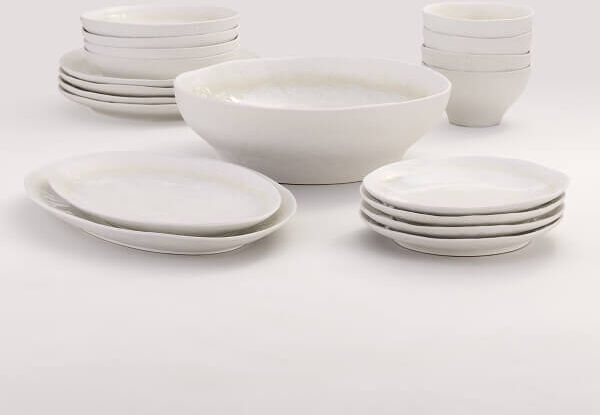
Stellar Stoneware Mylor Hosting For 4 SetElevate everyday dining with the Stellar Stoneware Mylor collection, defined by its rich reactive glaze that gives each piece a subtly unique character. Blending warmth with understated style, Mylor brings a considered, artisanal touch to both casual meals and relaxed entertaining. Crafted from durable stoneware and fired for strength, each piece is designed to withstand daily use while maintaining its refined appearance. Plates and bowls are thoughtfully weighted for a balanced, comfortable feel in hand—offering reassuring sturdiness without compromising elegance. The thick stoneware construction also provides excellent heat retention, helping dishes stay warmer for longer. Designed for modern living, the collection is microwave and dishwasher safe, and suitable for oven use up to 180°C—ideal for everything from reheating to finishing dishes. Set includes: 4 dinner plates, 4 side plates, 4x pasta bowls, 4 cereal bowls, 1x medium platter, 1x large platter and 1x serving bowl.199,95 £*Shipping: 0,00 £Secure redirect to the provider


-
What are equivalence classes?
Equivalence classes are sets of elements that are considered equivalent based on a specific relation or criteria. In mathematics, equivalence classes are used to partition a set into subsets where each element in a subset is considered equivalent to every other element in that subset. Equivalence classes help to simplify complex structures and make it easier to analyze and understand relationships between elements. **
-
Are equivalence classes equal?
Equivalence classes are not equal in the sense that they may contain different elements. However, equivalence classes are equal in the sense that they represent the same set of elements that are equivalent under a given equivalence relation. In other words, two equivalence classes are equal if they contain the same elements that are related to each other in the same way according to the equivalence relation. **
-
What are equivalence relations?
Equivalence relations are a type of relation between elements of a set that satisfy three properties: reflexivity, symmetry, and transitivity. Reflexivity means that every element is related to itself. Symmetry means that if one element is related to another, then the other is related to the first. Transitivity means that if one element is related to a second, and the second is related to a third, then the first is related to the third. Equivalence relations are important in mathematics and other fields because they allow us to classify elements of a set into distinct equivalence classes based on their relationships with each other. **
-
Does this equivalence hold?
Without knowing the specific equivalence being referred to, it is difficult to provide a definitive answer. Equivalences in mathematics and logic are typically proven through rigorous reasoning and logical deduction. It is important to carefully examine the definitions and properties of the elements involved in the equivalence to determine if it holds true. Without further information, it is not possible to determine if the equivalence holds. **

What are equivalence points?
Equivalence points are the points in a titration where the amount of titrant added is stoichiometrically equivalent to the amount of analyte present in the sample. At the equivalence point, the reaction between the titrant and analyte is complete, and the solution is in its most stable state. This is often indicated by a sharp change in pH or a color change in the solution. The equivalence point is used to determine the concentration of the analyte in the sample. **
Can you determine all equivalence classes with respect to this equivalence relation?
No, I cannot determine all equivalence classes with respect to the equivalence relation without knowing the specific relation in question. The equivalence classes depend on the specific definition of the relation and the elements involved. Each equivalence class represents a set of elements that are related to each other according to the given relation. **
Top-Angebote
Products related to Equivalence:
-
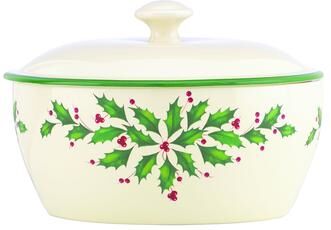
Lenox Hosting The Holidays Covered CasseroleThis Hosting the Holidays Casserole Dish is ideal for serving large dinner parties. Crafted of durable ivory porcelain, this spacious dish features a festive holly motif and comes with a matching lid.45,99 $*Shipping: 0,00 $Secure redirect to the provider
-
Lenox Hosting The Holidays Bread TrayWhether presenting an assortment of rolls or a buttery log of Texas toast, this festive ceramic Hosting the Holidays Bread Tray will not disappoint. The tray features a holly motif and is accented with 24-karat gold.44,49 $*Shipping: 0,00 $Secure redirect to the provider
-
What is equivalence?
Equivalence refers to the state of being equal or interchangeable in value, function, or meaning. In mathematics, equivalence is used to denote that two expressions or equations have the same value or meaning. In other contexts, equivalence can refer to the similarity or comparability of two things. Overall, equivalence implies a relationship of equality or similarity between two or more entities. **
-
Is equivalence transformation allowed?
Yes, equivalence transformation is allowed in mathematics. It involves manipulating an equation or expression by applying operations that do not change the solution set of the equation. This can include adding or subtracting the same quantity to both sides of an equation, multiplying or dividing both sides by the same non-zero number, or applying other algebraic operations that preserve the equality of the original equation. Equivalence transformations are commonly used to simplify equations, solve for unknown variables, or prove mathematical statements. **
-
What are equivalence classes?
Equivalence classes are sets of elements that are considered equivalent based on a specific relation or criteria. In mathematics, equivalence classes are used to partition a set into subsets where each element in a subset is considered equivalent to every other element in that subset. Equivalence classes help to simplify complex structures and make it easier to analyze and understand relationships between elements. **
-
Are equivalence classes equal?
Equivalence classes are not equal in the sense that they may contain different elements. However, equivalence classes are equal in the sense that they represent the same set of elements that are equivalent under a given equivalence relation. In other words, two equivalence classes are equal if they contain the same elements that are related to each other in the same way according to the equivalence relation. **
Similar search terms for Equivalence
-
Stellar Stoneware Bantham Hosting For 8 SetIntroduce calm, contemporary style to your table with the Stellar Stoneware Bantham collection. Defined by smooth, modern contours and a soft green reactive glaze, each piece brings a fresh, artisan-inspired feel to everyday dining. Crafted from durable stoneware and fired for exceptional strength, the range offers excellent resistance to chipping and everyday wear. The naturally smooth glazed finish resists staining, cleans with ease, and provides a reassuringly balanced feel in hand. Its thick stoneware construction also enhances heat retention, helping dishes stay warmer for longer. Designed for modern living, every piece is microwave, dishwasher, and oven safe (up to 180°C), making the collection as practical as it is elegant—ideal for both daily use and relaxed entertaining. Set includes: 8 dinner plates, 8 side plates, 8x pasta bowls, 8 cereal bowls, 1x medium platter, 1x large platter and 1x serving bowl324,95 £*Shipping: 0,00 £Secure redirect to the provider
-
Stellar Stoneware Mylor Hosting For 4 SetElevate everyday dining with the Stellar Stoneware Mylor collection, defined by its rich reactive glaze that gives each piece a subtly unique character. Blending warmth with understated style, Mylor brings a considered, artisanal touch to both casual meals and relaxed entertaining. Crafted from durable stoneware and fired for strength, each piece is designed to withstand daily use while maintaining its refined appearance. Plates and bowls are thoughtfully weighted for a balanced, comfortable feel in hand—offering reassuring sturdiness without compromising elegance. The thick stoneware construction also provides excellent heat retention, helping dishes stay warmer for longer. Designed for modern living, the collection is microwave and dishwasher safe, and suitable for oven use up to 180°C—ideal for everything from reheating to finishing dishes. Set includes: 4 dinner plates, 4 side plates, 4x pasta bowls, 4 cereal bowls, 1x medium platter, 1x large platter and 1x serving bowl.199,95 £*Shipping: 0,00 £Secure redirect to the provider
-
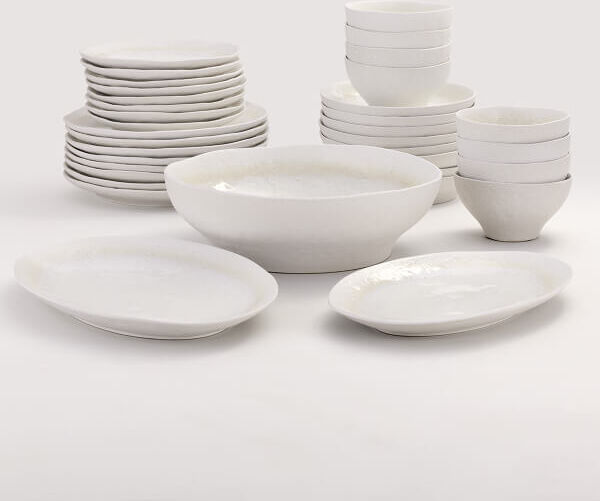
Stellar Stoneware Mylor Hosting For 8 SetElevate everyday dining with the Stellar Stoneware Mylor collection, defined by its rich reactive glaze that gives each piece a subtly unique character. Blending warmth with understated style, Mylor brings a considered, artisanal touch to both casual meals and relaxed entertaining. Crafted from durable stoneware and fired for strength, each piece is designed to withstand daily use while maintaining its refined appearance. Plates and bowls are thoughtfully weighted for a balanced, comfortable feel in hand—offering reassuring sturdiness without compromising elegance. The thick stoneware construction also provides excellent heat retention, helping dishes stay warmer for longer. Designed for modern living, the collection is microwave and dishwasher safe, and suitable for oven use up to 180°C—ideal for everything from reheating to finishing dishes. Set includes: 8 dinner plates, 8 side plates, 8x pasta bowls, 8 cereal bowls, 1x medium platter, 1x large platter and 1x serving bowl324,95 £*Shipping: 0,00 £Secure redirect to the provider
-
Stellar Stoneware Bantham Hosting For 4 SetIntroduce calm, contemporary style to your table with the Stellar Stoneware Bantham collection. Defined by smooth, modern contours and a soft green reactive glaze, each piece brings a fresh, artisan-inspired feel to everyday dining. Crafted from durable stoneware and fired for exceptional strength, the range offers excellent resistance to chipping and everyday wear. The naturally smooth glazed finish resists staining, cleans with ease, and provides a reassuringly balanced feel in hand. Its thick stoneware construction also enhances heat retention, helping dishes stay warmer for longer. Designed for modern living, every piece is microwave, dishwasher, and oven safe (up to 180°C), making the collection as practical as it is elegant—ideal for both daily use and relaxed entertaining. Set includes: 4 dinner plates, 4 side plates, 4x pasta bowls, 4 cereal bowls, 1x medium platter, 1x large platter and 1x serving bowl.199,95 £*Shipping: 0,00 £Secure redirect to the provider
-
What are equivalence relations?
Equivalence relations are a type of relation between elements of a set that satisfy three properties: reflexivity, symmetry, and transitivity. Reflexivity means that every element is related to itself. Symmetry means that if one element is related to another, then the other is related to the first. Transitivity means that if one element is related to a second, and the second is related to a third, then the first is related to the third. Equivalence relations are important in mathematics and other fields because they allow us to classify elements of a set into distinct equivalence classes based on their relationships with each other. **
-
Does this equivalence hold?
Without knowing the specific equivalence being referred to, it is difficult to provide a definitive answer. Equivalences in mathematics and logic are typically proven through rigorous reasoning and logical deduction. It is important to carefully examine the definitions and properties of the elements involved in the equivalence to determine if it holds true. Without further information, it is not possible to determine if the equivalence holds. **
-
What are equivalence points?
Equivalence points are the points in a titration where the amount of titrant added is stoichiometrically equivalent to the amount of analyte present in the sample. At the equivalence point, the reaction between the titrant and analyte is complete, and the solution is in its most stable state. This is often indicated by a sharp change in pH or a color change in the solution. The equivalence point is used to determine the concentration of the analyte in the sample. **
-
Can you determine all equivalence classes with respect to this equivalence relation?
No, I cannot determine all equivalence classes with respect to the equivalence relation without knowing the specific relation in question. The equivalence classes depend on the specific definition of the relation and the elements involved. Each equivalence class represents a set of elements that are related to each other according to the given relation. **
* All prices are inclusive of VAT and, if applicable, plus shipping costs. The offer information is based on the details provided by the respective shop and is updated through automated processes. Real-time updates do not occur, so deviations can occur in individual cases. ** Note: Parts of this content were created by AI.